
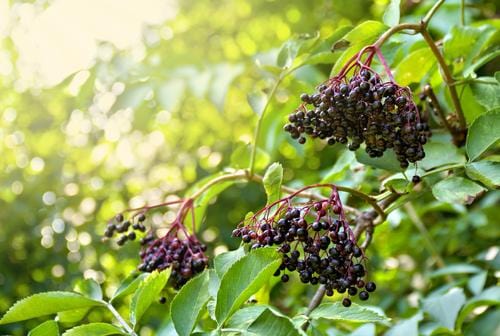
Elderberry (Haschberg)
European Elderberry
$18.00
Haschberg Elderberry is one of the most widely grown European elderberry varieties and is valued for its heavy yields, vigorous growth, and excellent fruit quality. Originally developed in Austria, Haschberg has become a standard commercial variety due to its reliability and large, productive clusters of berries.
The plant produces large clusters of small, deep purple to black berries that are rich in flavor and packed with antioxidants. These berries are commonly used to make elderberry syrup, juice, jams, wine, and herbal preparations. While elderberries should always be cooked before consumption, they develop a deep, rich flavor when processed.
In addition to its fruit production, Haschberg also produces large clusters of fragrant white elderflowers in early summer. These flowers can be harvested and used for teas, syrups, fritters, and traditional elderflower beverages.
Key Characteristics
Fruit Quality:
Produces large clusters of small dark purple to black berries with rich flavor. Berries are excellent for syrups, jams, wine, juice, and medicinal preparations.
Harvest Timing:
Typically ripens in late summer to early fall depending on climate.
Yield:
Very productive once established. Mature plants can produce large clusters of berries annually under good growing conditions.
Pollination:
Produces best when planted with another European elderberry (Sambucus nigra) variety.
Compatible pollinators:
✔ Haschberg Elderberry
✔ Korsor Elderberry
American elderberry varieties generally do not provide reliable pollination for European elderberries.
Growing Requirements
Hardiness Zones:
Cold hardy in USDA Zones 3–8, tolerating winter temperatures down to approximately -30°F once established.
Utah Growing Notes:
Elderberries grow very well in Utah and are well suited to climates along the Wasatch Front and other regions with adequate irrigation. They are extremely cold hardy and handle winter temperatures easily.
Growth Habit:
A vigorous deciduous shrub that typically grows 8–12 feet tall and wide. Plants produce new fruiting canes regularly and can form large productive clumps over time.
Soil & Sun:
Performs best in full sun with moist, well-drained soil. Elderberries tolerate a wide range of soils but produce best with consistent moisture and fertile soil.
Maintenance:
Benefits from occasional pruning to remove older canes and encourage vigorous new growth. Regular pruning helps maintain plant vigor and encourages strong annual berry production.